
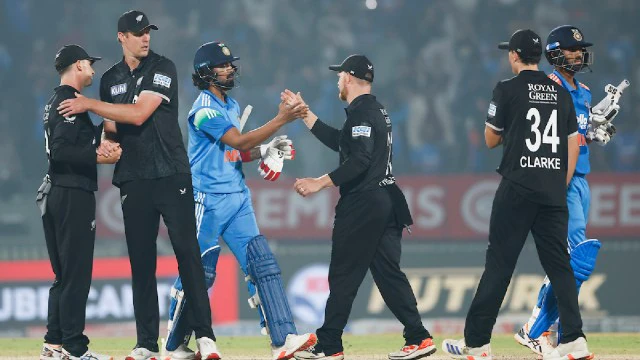
The three-match ODI series between India and New Zealand began with a high-octane contest at Vadodara, where the hosts held their nerve to pull off a four-wicket victory and take an early 1–0 lead. A target of 301 always promised a competitive chase, and the match delivered drama, momentum swings and a reminder of why India remain one of the best run-chasing sides in world cricket.
New Zealand Build a Strong Platform
After being asked to bat first, New Zealand started with patience and control. Openers Henry Nicholls and Devon Conway focused on rotating the strike early before opening up once they were set. Their century partnership laid the perfect base, allowing the middle order to play with freedom. Both batters brought up well-earned half-centuries, putting India under pressure through the first half of the innings.
Once the openers departed in quick succession, India sensed an opening. The pace and spin combination slowed the scoring, and wickets in the middle overs kept New Zealand from running away with the game. However, Daryl Mitchell held firm at one end. He played a mature knock, mixing power with placement, and ensured New Zealand pushed past the 300-run mark. His late hitting lifted the visitors to 300 for 8 — a total that looked just enough to make things uncomfortable for India.
A Chase Built Around Kohli
India’s reply began with intent. Rohit Sharma tried to attack from the outset, clearing the ropes a couple of times, but his stay was short-lived. With an early wicket down, the responsibility fell on Virat Kohli and Shubman Gill, and the duo responded with a calm, well-paced partnership.
Kohli looked in complete control, timing the ball beautifully and finding gaps with ease. Gill, initially cautious, soon gained confidence and started playing his natural strokes. Together, they took the pressure off India, keeping the required run rate in check while steadily building a strong foundation. Their stand tilted the match heavily in India’s favour.
Gill eventually fell for a fluent half-century, but by then India were cruising. Shreyas Iyer joined Kohli and continued the momentum, attacking the spinners and making sure New Zealand had little room to breathe. With Kohli approaching a well-deserved century and the finish line in sight, the chase looked almost routine.
Late Twist Adds Tension
Just when the match seemed wrapped up, New Zealand struck back. Kohli was dismissed on 93, agonisingly short of another hundred, and that breakthrough opened the door for the visitors. A couple of quick wickets followed, and suddenly India found themselves wobbling with the finish line still some distance away.
The pressure increased when Washington Sundar, struggling with a back issue, was forced to bat with limited mobility. In walked Harshit Rana, and the young all-rounder played a fearless cameo, finding boundaries at crucial moments to keep the target within reach. His brief but impactful knock ensured India did not lose control of the chase.
At the other end, KL Rahul kept his cool. He chose the right balls to attack and the right moments to rotate the strike. In the penultimate over, Rahul took charge, striking boundaries and then finishing the game in style with a towering six, sealing a memorable four-wicket win for India.
What the Result Means
This victory gives India an early advantage in the series and underlines their strength in chasing big totals. Kohli’s masterful 93 was the backbone of the chase, while contributions from Gill, Iyer, Rana and Rahul ensured the team crossed the line despite a late scare.
For New Zealand, there were positives in both batting and bowling, but the inability to close out the game after Kohli’s dismissal will be a concern. With two matches still to play, the series remains wide open, but India have laid down a strong marker in Vadodara with a win built on composure, experience and clutch performances.